Reviewed guide
Palworld Reproduction Guide: Breeding, Passives, Potential & Routes
Complete a first breeding cycle, plan current-version routes, inherit passives and Potential, and build perfect Pals in Palworld 1.0.
Palworld reproduction is the full loop of pairing a male and female Pal, supplying their Breeding Farm with Cake, collecting the egg, and hatching a child. The species comes from the parent combination, while passives, Potential, and some active skills can come from the parents. In version 1.0, specialist Cakes and Mutation add more control and more reasons to hatch in batches.
For a first egg, build one Breeding Farm and one Egg Incubator, assign opposite-sex parents, place Cake in the farm's attached chest, wait for the egg, then incubate it. For a serious project, decide the exact target first and use the Breeding Calculator before spending Cake. Old Early Access pair lists are not safe for the 1.0 breeding table.
Why breeding is worth the setup
Breeding does four jobs at once. It can unlock a Pal you have not captured, move valuable passives into a new species, combine high HP, Attack, and Defense Potential, and create the duplicate Pals needed for condensation. A random wild catch can be useful immediately, but a breeding line lets you define the result and improve it one generation at a time.
You do not need a perfect Pal to finish the game. Start breeding when the result solves a real problem: an early worker, a combat partner, a mount, a rare passive carrier, or a reliable source of condensation copies. Save the perfect-Potential and four-passive project until your Cake supply and Palbox organization can support repeated hatches.
Quick start: produce your first egg
Unlock and place a Breeding Farm with open walking space inside the base. Choose one male and one female Pal; species and element do not need to match. Assign both to the same farm by throwing them at the structure or fixing their assignment through the Monitoring Stand. Put at least one Cake in the wooden chest attached to the farm.
When both parents are recognized and Cake is available, the farm shows a breeding progress bar. The parents can finish progress before a Cake is consumed, but the egg is not completed without Cake. Cake stored in the farm chest does not spoil, which makes that chest the safest place for a prepared batch.
Collect the finished egg and place it in an Egg Incubator. Temperature comfort affects incubation, not the parent pairing or the species result. If the status says the egg is too hot or too cold, adjust the nearby heating or cooling setup instead of changing parents.
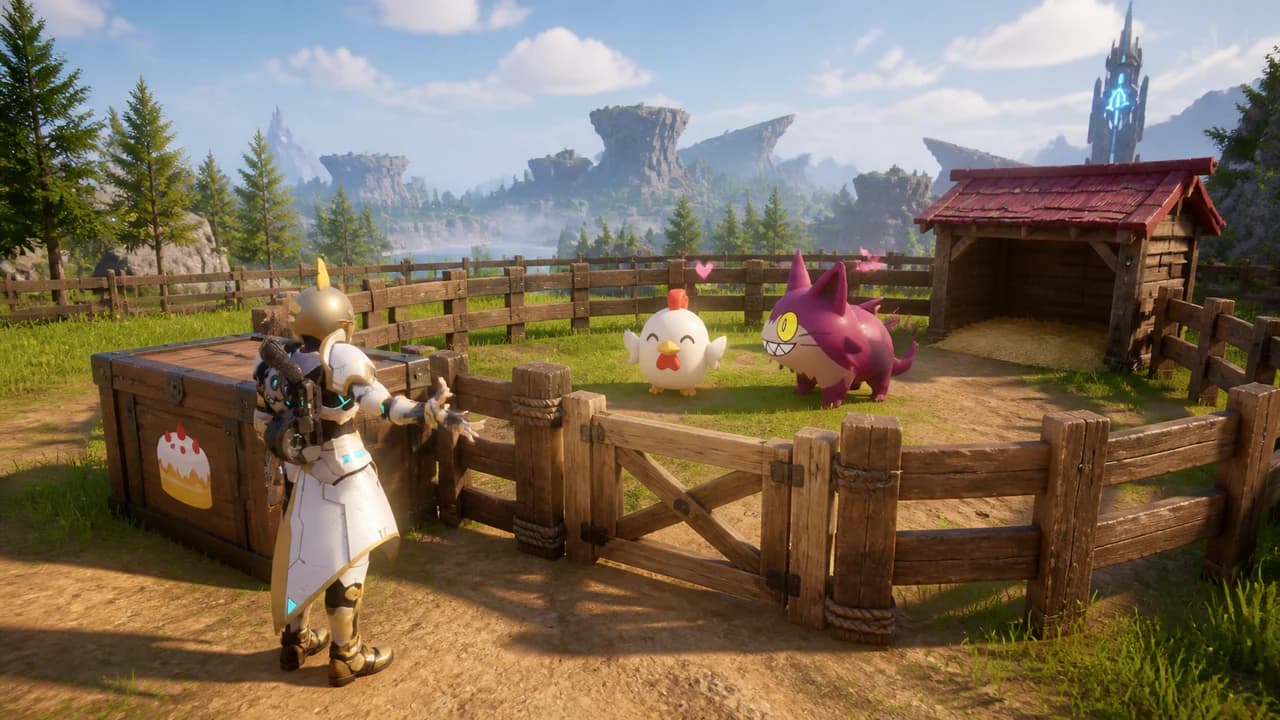
Build a Cake supply before adding more farms
Standard Cake uses Flour, Red Berries, Milk, Eggs, and Honey. A Wheat Plantation and Mill cover Flour; Ranch Pals can supply Milk, Eggs, and Honey. If ingredients are the bottleneck, fix the Wheat Seeds route and Honey production before building a second Breeding Farm.
Version 1.0 adds four specialist Cakes. Mushroom Cake makes strong stat growth more likely. Vegetable Cake produces two eggs from one cycle and is the practical choice for volume or condensation copies. Extravagant Vegetable Cake improves stat growth and raises the chance of Mutation. Special Cake raises the chance that a child inherits multiple parent passives. Use ordinary Cake while establishing a route, then spend the specialist Cake that matches the final goal.
Mutation is different from ordinary inheritance. A Mutated Egg can produce a stronger child with improved stats and a mutation-exclusive passive. Treat it as a valuable bonus, not a requirement for the first clean breeding line. If Mutation is the goal, increase the number of attempts and use Extravagant Vegetable Cake rather than mixing that objective into every project.
Improve production speed without wasting traits
General Work Speed does not move the Breeding Farm timer. Philanthropist is the direct breeding-speed passive, while Nocturnal keeps parents from losing the night to sleep. A Braloha working at the base can also shorten egg production. The breeding speed guide covers the dedicated speed options and the separate incubation step.
Before scaling, remove ordinary downtime. Confirm both parents stay assigned, keep them fed and healthy, leave enough room for pathing, and stock Cake in advance. Add incubators or unlock the late-game Ancient Hatchery before parallel farms create eggs faster than you can process them. The Ancient Hatchery unlocks deep in the technology tree, so the normal Farm and Incubator remain the correct early and midgame workflow.

How the child species is chosen
Most ordinary pairs are resolved from hidden breeding values assigned to each species. The game compares the parents and selects the child that matches the calculated result. This is why two unrelated-looking Pals can produce a third species and why elemental type alone cannot predict the child.
Special combinations override the ordinary calculation and always produce a fixed result. Some assignments also care which parent is male and which is female. Do not memorize a large static chart: select Parents to Child in the Breeding Calculator, place the male in Parent A and the female in Parent B, and calculate the current result. If the pair is directional, preserve that assignment in the farm.
To work backward, switch the calculator to Target to Parents and choose the Pal you want. Start with a direct pair you already own. If every direct pair requires a missing parent, choose one missing parent as the temporary target, find its parents, and repeat until the leaves of the route are Pals in your box or easy captures.
Plan a short route from Pals you own
Write the project in one line before breeding: target species, role, required passives, required Potential, and whether you need Mutation, Alpha status, or only condensation copies. This prevents an attractive but irrelevant hatch from changing the goal halfway through the chain.
Prefer fewer generations, but do not count generations alone. A two-step route that uses common parents with clean passives can be cheaper than a direct pair that requires rare captures or carries many unwanted traits. Keep one useful male and one useful female from each intermediate species so a later branch does not force you to rebuild the route.
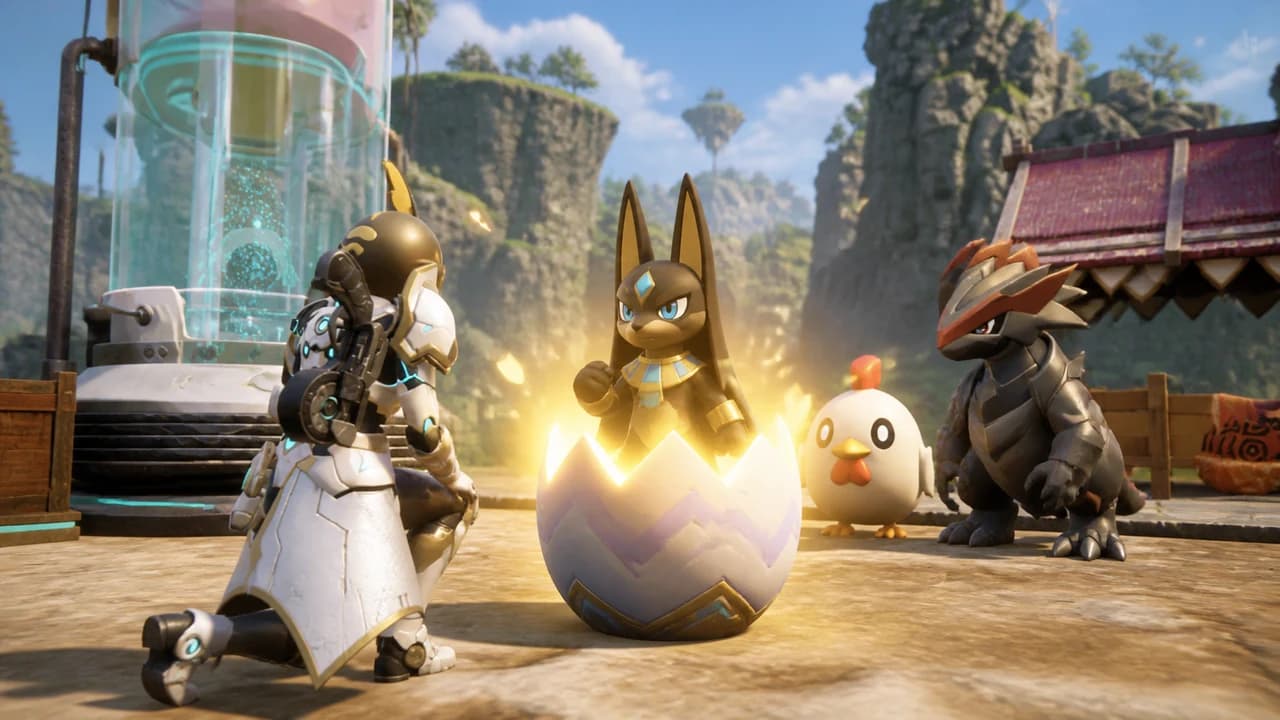
For an accessible first project, choose a worker you will use immediately, such as Anubis, open Target to Parents, and select the easiest current pair in your collection. Produce the species first with ordinary Cake. After the route works, replace a parent with a cleaner passive carrier and repeat. The Anubis breeding guide applies this workflow without depending on a stale fixed pair.
Inherit the passives you actually want
A child can inherit passives from either parent and can also roll an unrelated passive. The cleanest final pair carries only the unique passives required by the build. Split four desired passives across the parents, or use one clean parent with the missing traits; duplicate copies of the same passive do not create a better target pool.
Do not demand the final result in one jump. Hatch a batch, keep the child that improves the line, and replace the weaker parent. A two-passive child with better Potential may be a stronger bridge than a four-passive child that carries poor genetics. Label or rename breeding stock so clean carriers are not condensed or sold by mistake.
Separate worker and combat goals. A base worker normally values work output, uptime, food efficiency, or movement for transport. A combat Pal values damage, defense, cooldown, element, or a specific role. Mixing both sets of passives creates a child that is less reliable at either job. The Pal Surgery Table and Disposable Implants can repair some late-game passive gaps, but rare or unavailable passives should stay protected in the bloodline.
Special Cake is best saved for the final passive stage, after the combined pool is clean. It improves the chance of inheriting multiple parent passives, but it cannot make a cluttered pair precise. Parent cleanup still matters more than feeding an expensive Cake to every early route step.
Combine high Potential without losing the line
Potential is the genetic quality behind HP, Attack, and Defense growth. Inspect it with the appropriate in-game glasses, then keep parents that are perfect or close to perfect in the stats relevant to the role. Potential can inherit from either parent or roll a new value, so even two excellent parents still require a batch rather than a single egg.
Build the line in layers. First secure a child with one or two strong Potential values. Pair that child with another carrier for the missing value. Once both final parents combine the desired Potential and passives, produce the finishing batch. Life, Power, and Stout Fruits can correct a near-perfect result, so compare the fruit cost with the time and specialist Cake needed for another generation.
Potential does not improve every job equally. It matters directly for combat stats, while a pure base worker usually gains more from the correct passives, partner skill, work suitability, and condensation rank. Do not discard an excellent worker because its combat Potential is imperfect unless combat is part of its role.
Active skills, level-one parents, and final checks
Offspring can inherit an active skill known by a parent, but exclusive skills cannot simply be moved to another species. When a specific inheritable move matters, keep the final parents at a low level so their known-skill pool stays small. Finish the species, passive, and Potential line before spending time on a move that the child can learn naturally or receive from a Skill Fruit.
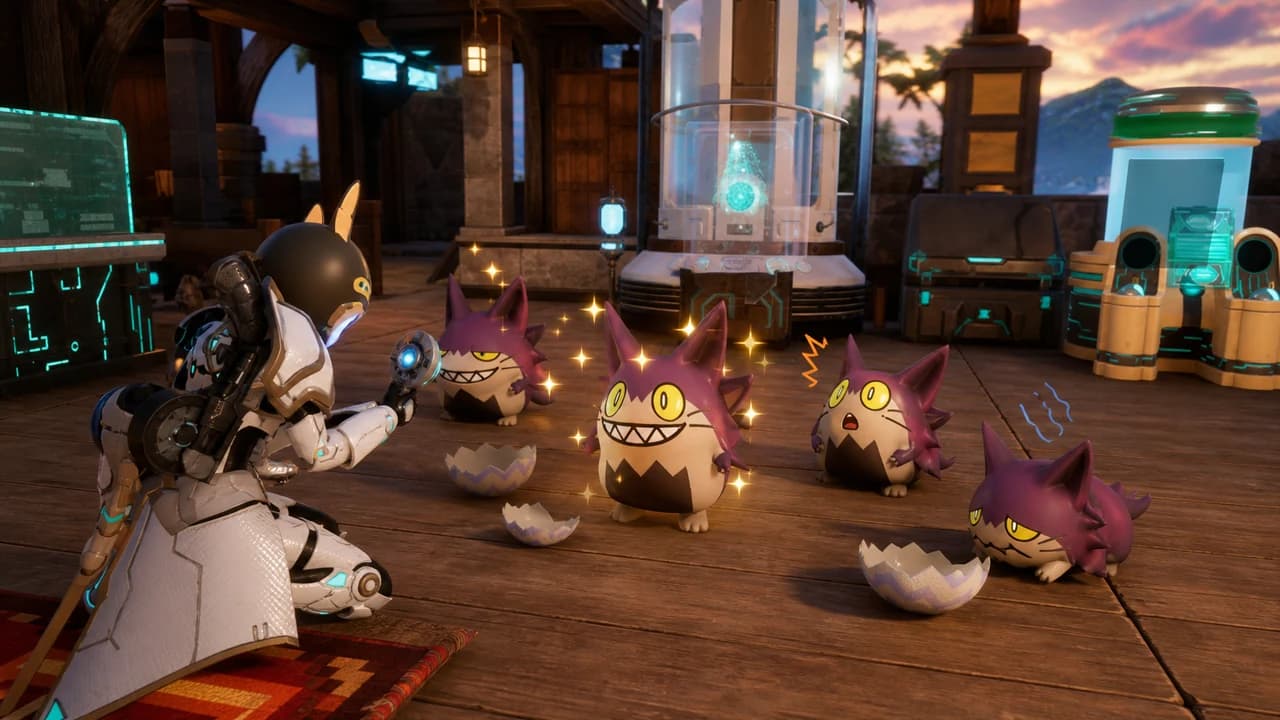
Inspect every final hatch in the same order: species and gender, passives, HP/Attack/Defense Potential, active skill, and any Alpha or Mutation result. Keep partial successes that improve one missing part of the pair. Move failures into a separate Palbox page for condensation so the breeding stock remains easy to scan.
A repeatable perfect-Pal production loop
Start with the target role, not the target species alone. Confirm the current parent route, automate ordinary Cake, and produce the species once. Next, introduce clean passive carriers and upgrade the pair one child at a time. Add high Potential carriers after the route is stable, then use Special Cake for the final passive batch or Extravagant Vegetable Cake for a separate Mutation batch.
Stop when the Pal meets the role. A worker with the correct passives and work suitability can be finished even if its combat Potential is ordinary. A combat Pal may be finished with three perfect Potential values and the right passive set without a rare Mutation. Condense spare children only after protecting both final parents and any intermediate carrier that would be expensive to recreate.
Common breeding mistakes
If no progress bar appears, verify opposite genders, fixed assignment, farm pathing, and parent health. If progress completes but no egg appears, check the farm's own Cake chest. If eggs hatch into the wrong species, verify both parent slots against current 1.0 data and check whether the recipe is gender-specific.
If passives will not converge, count every unique passive across both parents and remove unwanted traits before spending Special Cake. If the base is buried in eggs, stop adding farms and improve incubation capacity. If a route consumes too many generations, return to Target to Parents and compare another direct pair from your existing Palbox.
What should a new player breed first?
Breed a Pal that immediately improves the base or team, not the rarest name on a chart. A useful worker teaches the full loop, pays back the Cake setup, and becomes a parent for later routes. Anubis is a practical example once one of its current parent pairs is available.
Do parents need to be the same species?
No. Most Pal species can breed across species as long as one parent is male and the other is female. The parent combination determines the child; identical-species parents are useful when you want the same species with better inherited traits.
Which Cake should I use?
Use ordinary Cake to establish a route, Vegetable Cake for volume, Mushroom Cake for better stat growth, Extravagant Vegetable Cake for better stat growth and Mutation attempts, and Special Cake for the clean final passive pair. The expensive Cake supports the goal; it does not replace good parent selection.
Should I chase passives and Potential together?
Only after you have a stable route. Early in the project, keep any child that improves either the passive set or the missing Potential. Combine both requirements in the final pair, then hatch in batches. This keeps useful partial successes from becoming wasted eggs.